
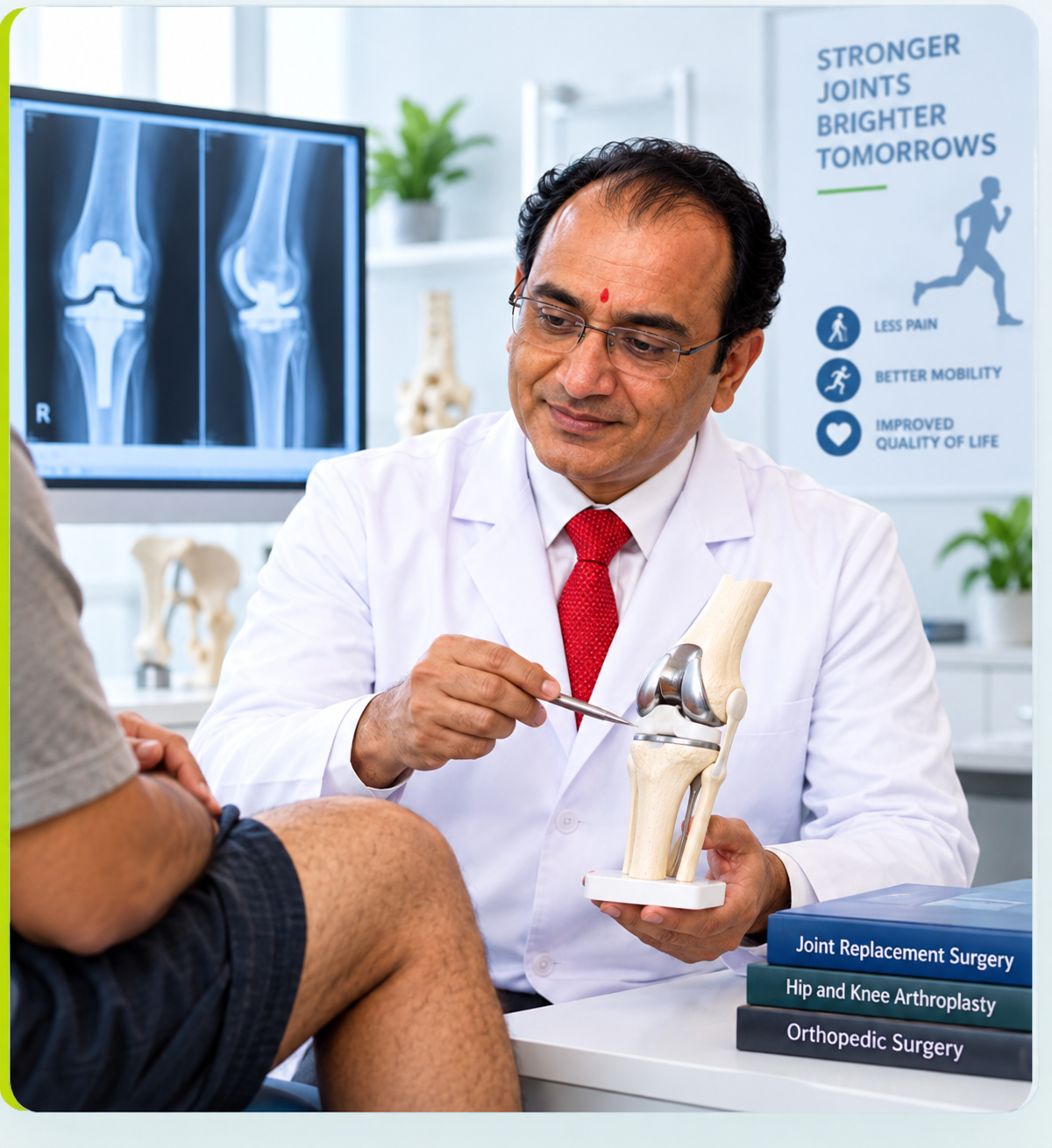
Severe Arthritis
Knee or hip arthritis with painful movement and reduced independence.
ADVANCED CARE
Joint replacement is considered when severe arthritis, long-term wear and tear, injury-related damage, or progressive pain starts affecting walking, climbing stairs, sitting, and daily function. The aim is to reduce pain and improve movement when conservative care is no longer enough.
At our clinic in Pimple Saudagar, patients from across Pune and PCMC are guided through diagnosis, imaging review, non-operative options where suitable, and surgical planning only when joint replacement becomes the better long-term choice.
FOCUS AREAS
COMPARISON
Suitability for either option is determined only after imaging and clinical assessment — this isn't a preference patients choose upfront, it's a decision the extent of joint damage makes for them.
ADVANCED TECHNOLOGY
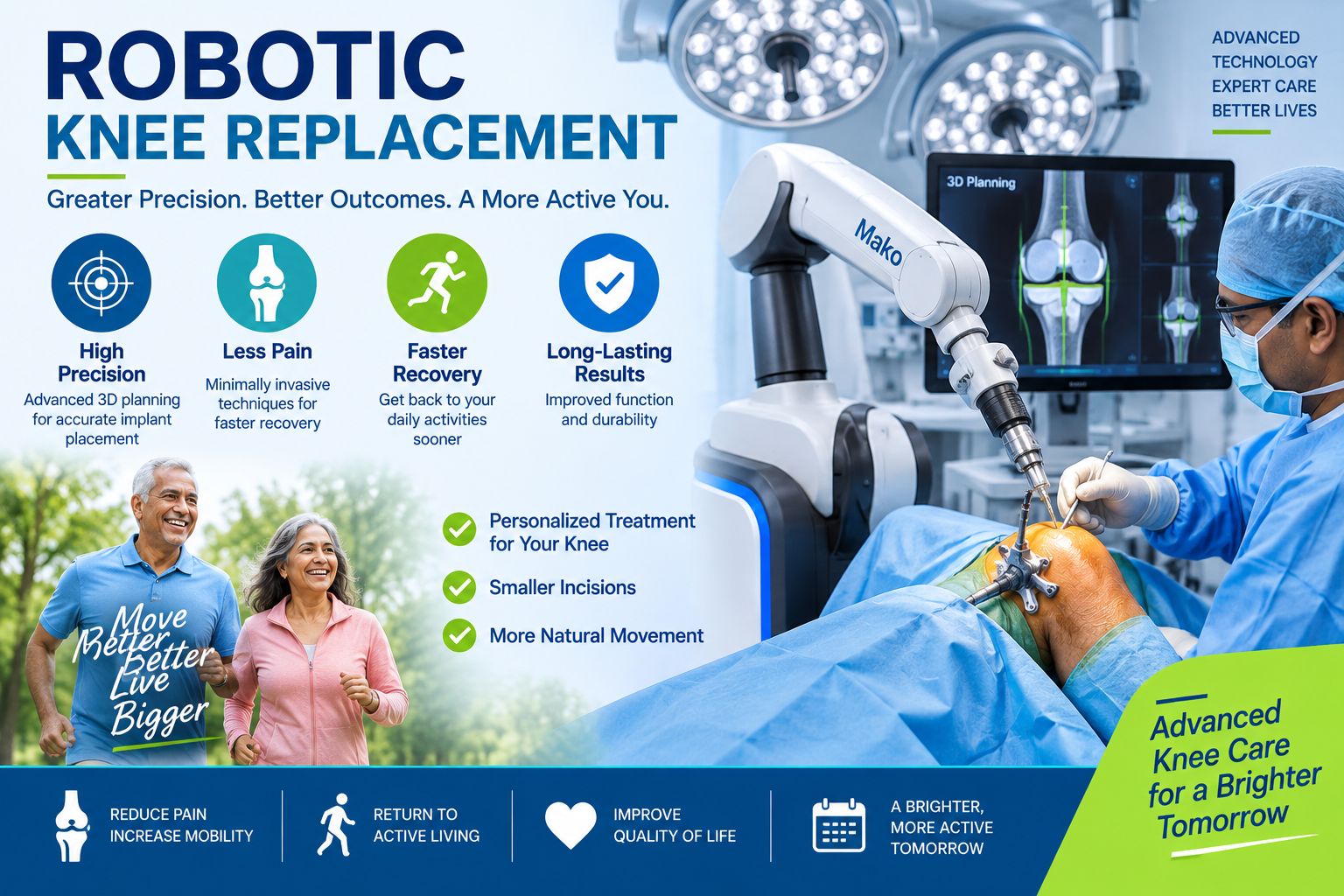
Robotic-assisted knee replacement uses computer-guided technology to help the surgeon plan implant positioning and alignment with greater precision than manual techniques alone. The robotic system doesn't perform the surgery independently — it assists the surgeon with more accurate bone preparation and implant placement based on each patient's specific knee anatomy.
Potential advantages associated with robotic-assisted techniques include more precise implant alignment and, in some cases, a smoother early recovery — though outcomes still depend heavily on surgical planning, patient factors, and post-operative rehabilitation, not the technology alone.
COMMON REASONS
Knee or hip arthritis with painful movement and reduced independence.
Stiffness affecting walking, stairs, and daily routines.
Pain unresponsive to medicines, injections, or therapy.
Advanced wear and tear or joint alignment changes.
Persistent limitation affecting sleep, work, or daily function.
Second opinion if already advised to consider replacement.
Is joint replacement always the first recommendation? No. Non-operative options such as medicines, physiotherapy, weight management, and injections are explored first wherever appropriate. Joint replacement is recommended only when conservative treatment is no longer providing adequate relief.
ASSESSMENT
Detailed review of pain, stiffness, and functional limitations in everyday movement.
Imaging helps determine arthritis severity and treatment suitability.
Review of previous treatments tried and their effectiveness.
Honest explanation of expected benefits, risks, and recovery involved.
CARE PATHWAY
The painful joint, stiffness level, and limitations in everyday movement are reviewed carefully.
X-rays and related investigations help determine arthritis severity and treatment suitability.
Non-operative care or joint replacement planning is explained according to pain, function, and long-term goals.
Walking, strengthening, hospital preparation, and post-treatment recovery guidance are planned in advance.
WHY CHOOSE US
RECOVERY TIMELINE
Recovery timelines vary depending on the joint replaced, overall health, and adherence to the rehabilitation plan. Recovery progression includes: First 1-2 weeks with hospital recovery and early mobilisation; 2-6 weeks of progressive physiotherapy; 6-12 weeks of continued rehabilitation; and long-term follow-up to monitor implant function and overall joint health.
FAQs
🎯 Next Step
Whether you are exploring non-surgical options or have already been advised to consider joint replacement, our team can guide you through a thorough evaluation and the right path forward.